Rest Days Done Right: Recover Faster, Get Leaner
Most people treat rest days like a reward. Or like a mistake.
They either take a rest day and feel guilty, or they skip rest days completely, then wonder why their joints hurt, their strength is stuck, and they look kind of… the same. Week after week.
Here’s the truth, and it’s not the exciting truth.
Rest days are part of the program. They are training.
If you do them right, you recover faster, you train harder on workout days, and yeah, you tend to get leaner because your body actually adapts instead of just surviving.
So this is a simple guide to doing rest days the smart way. No mystical “listen to your body” fluff. Real stuff you can actually do.
The biggest misconception: rest means doing nothing
Rest does not always mean lying still like a sleepy house cat.
Sometimes it does. If you’re cooked, you’re cooked.
But for most people, especially people who train 3 to 5 days per week, the best rest day is usually active recovery plus a few “boring” habits done consistently.
Think of rest days like this:
Workout days are the stimulus.
Rest days are when your body cashes the check.
No recovery, no results. Just fatigue. And inflammation. And you getting crankier for no reason.
Why rest days help you get leaner (even though you are not “burning” as much)
This part messes with people because fat loss gets framed as “more work equals more results.”
But getting lean is not just about burning calories during training.
Rest days help you get leaner because they support the stuff that actually keeps fat loss moving:
Better sleep, which helps hunger control and recovery
Lower overall stress, which makes dieting easier and training more productive
Less soreness, so you move more and train harder when it matters
Stronger workouts, which maintain muscle while you lose fat
Fewer injuries, which is honestly the silent killer of most transformations
If you beat yourself into the ground, you might burn a few extra calories short term.
Then you get hurt. Or your steps drop. Or you binge because you are exhausted. Or you quit.
So yeah. Rest days can absolutely be part of the “get lean” plan.
The 3 types of rest days (and which one you should use)
There isn’t one perfect rest day. There are a few, and you rotate based on how you feel and what your training week looks like.
1. Full rest day (do almost nothing)
Use this when:
You slept terribly for multiple nights
You are deeply sore in a “something feels wrong” way
Your mood is off, motivation is tanked
Your joints feel beat up
You have a high stress week and training is already heavy
What it looks like:
Keep steps light
Stretch a little if it feels good
Eat normally
Go to bed early
That’s it. Simple.
2. Active recovery day (the best default)
Use this when:
You feel a bit stiff but not wrecked
You want to keep momentum
You recover well from training but still need a downshift
What it looks like:
Zone 2 cardio (walk, incline walk, bike) 20 to 45 minutes
A short mobility session
Extra sleep if you can get it
This is the sweet spot for most people.
3. “Technique” rest day (move, but keep it easy)
Use this when:
You want to practice form
You have trouble feeling certain muscles (back, glutes, etc.)
You love the gym and staying away makes you weirdly anxious
What it looks like:
Light technique work (like 50 to 60 percent effort)
Controlled tempo
No grinders, no PR attempts, no going to failure
You leave the gym feeling better than when you walked in. That’s the rule.
The rest day checklist (this is the whole thing)
If you want a “rest day plan” you can actually follow without overthinking, here it is.
1. Get your steps in, but don’t turn it into a death march
Steps are sneaky magic for recovery and body composition.
They increase blood flow, reduce stiffness, help your mood, and keep your weekly calorie burn steady without hammering your nervous system.
A good rest day target:
6,000 to 10,000 steps for most people
If you are already lean and dieting hard, sometimes lower is fine because fatigue management matters more
And no, it does not have to be a power walk with a weighted vest. Just walk.
2. Do 10 to 15 minutes of mobility, not 60 minutes of suffering
Mobility should make you feel looser. Not like you just survived a medieval punishment.
Pick a few basics:
Hamstring stretch (gentle)
Thoracic spine rotations
Ankle mobility rocks
Shoulder circles or band dislocates
If you want an easy flow:
1 to 2 minutes easy breathing (nasal, slow)
Hips, upper back, ankles
Done
Consistency beats the perfect routine you never repeat.
3. Eat like a normal person. Not like you are “off the plan”
Rest days aren’t cheat days.
Also. Rest days aren’t starvation days.
Your body still needs protein and total calories to repair muscle tissue, replenish glycogen, and keep hormones stable.
Keep protein the same on rest days. That’s the big one.
A simple target:
0.7 to 1.0 grams of protein per pound of goal bodyweight (close enough for most people)
Carbs and fats can vary based on your goals. But if you notice you’re always sore, always flat in the gym, always craving sugar at night…
You probably aren’t eating enough overall. Or you are under-eating carbs around training days. Or both.
4. Hydrate like it matters (because it does)
Hydration affects:
Performance
Pump
Mood
Digestion
Sleep quality
On rest days, people often drink less because they’re not sweating as much. Then they wonder why they feel stiff and headachy.
Basic approach:
Drink water steadily through the day
Add electrolytes if you sweat a lot, live in heat, or cramp easily
Incorporating proper hydration strategies can significantly improve your overall health and performance. It's important to understand that hydration affects various aspects of your body, including performance, mood, digestion, and sleep quality.
5. Sleep. Actually sleep
If you want the unfair advantage, it’s sleep.
On rest days, try to:
Keep the same bedtime as training days
Get morning light in your eyes for 5 to 10 minutes
Cut caffeine earlier than usual
Keep your room cool and dark
And if you can grab a short nap. Great. Just keep it under 30 minutes so it doesn’t wreck your night sleep.
How to know you actually need a rest day (not just laziness)
Sometimes you need rest. Sometimes you need to stop negotiating with yourself and train.
Here are a few signs a real rest day is the smart move:
Your performance is dropping 2 workouts in a row
Warm ups feel heavy and wrong
You are unusually irritable or anxious
Your resting heart rate is higher than normal for several days
You are sore in your tendons and joints, not just muscles
Sleep is getting worse despite being tired
Meanwhile, signs you might just be avoiding training:
You feel fine once you start moving
You are not sore, just unmotivated
You are scrolling and stalling, waiting to “feel like it”
Your last few sessions were easy but you’re still skipping
Not judging. Just calling it.
A good rule: start the warm up. If you feel awful after 10 minutes, pivot to active recovery and go home.
Active recovery ideas that work (and don’t feel like fake workouts)
Here are options you can rotate. Keep the intensity low.
Option A: Incline treadmill walk
25 to 40 minutes
Nose breathing if possible
You should be able to talk in full sentences
Option B: Easy bike or rower
15 to 30 minutes
Smooth pace
Stop before you get tired
Option C: The “long walk and podcast”
45 to 90 minutes easy walking
This one does wonders for stress
Option D: Mobility plus light core
10 minutes mobility
2 to 3 easy core movements (dead bug, plank, side plank)
The whole point is to feel better after.
The mistake that ruins rest days: doing “rest day HIIT”
This is super common.
People feel guilty for resting, so they do a “quick burner” workout on their rest day.
Usually it’s:
burpees
sprints
circuits to failure
random sweat punishment
That’s not rest. That’s just another workout. And it adds fatigue without adding much useful stimulus.
If your weekly program already has hard lifting sessions, adding HIIT on rest days often slows progress. Instead, consider the benefits of working out on rest days in a way that promotes recovery rather than exhaustion.
Rest days for different goals
If your goal is fat loss
On rest days:
Keep steps consistent
Keep protein high
Don’t slash calories aggressively
Prioritize sleep so cravings don’t run your life
Fat loss fails for most people because adherence breaks. Rest days are where adherence is protected. However, it's crucial to understand that some level of physical activity can still be beneficial during these days. In fact, active recovery could be a game changer for your overall fitness journey.
If your goal is muscle gain
On rest days:
Eat enough carbs to support training performance
Don’t skip protein “because you’re not lifting”
Take recovery seriously so you can push progressive overload
Also, soreness is not the goal. Growth is.
If your goal is strength
On rest days:
More full rest days can be helpful, especially with heavy compounds
Mobility should focus on positions you need (hips, ankles, shoulders)
Keep stress low
Strength adapts slowly. It loves consistency. It hates you being run down.
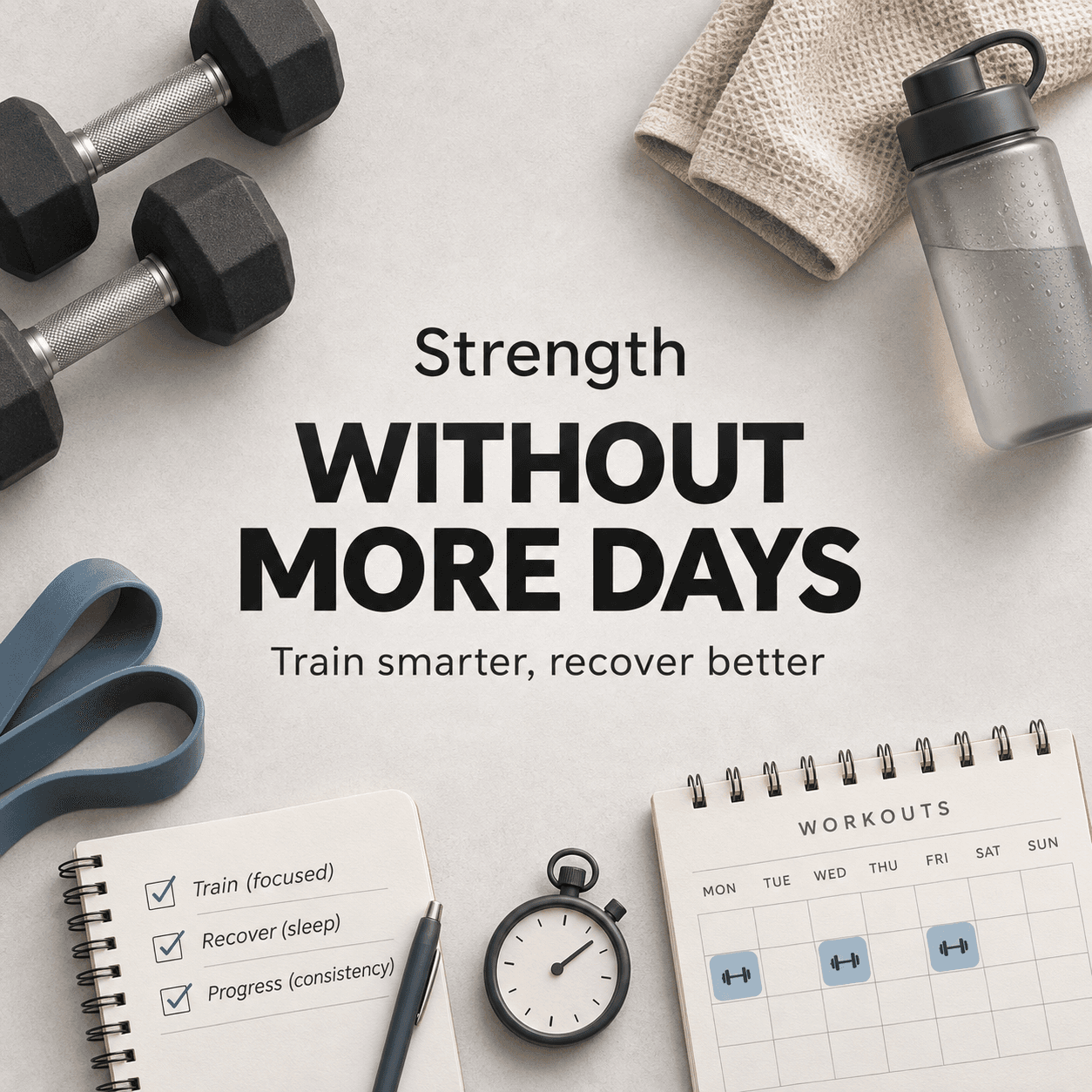
A simple weekly setup (for normal people with jobs)
Here are a few clean schedules that work.
3 days per week training
Mon: Train
Tue: Active recovery
Wed: Train
Thu: Full rest or easy walk
Fri: Train
Sat: Active recovery (walk, mobility)
Sun: Full rest
4 days per week training
Mon: Train
Tue: Train
Wed: Active recovery
Thu: Train
Fri: Full rest
Sat: Train
Sun: Active recovery
Notice how rest days aren’t random. They’re placed so you can actually attack the workouts.
This is basically how most solid programs are structured anyway. And if you want that kind of straightforward structure in a done for you format, that’s the whole vibe of the training guides over at Freedom’s Fitness. Simple workouts, clear progression, and none of the confusing noise.
What to do on a rest day when you are sore
First. Soreness is not a perfect indicator of anything, but it’s information.
If you are sore:
Walk. Seriously, walk.
Hydrate more than you think you need
Eat a normal amount of food, especially protein
Light mobility
Hot shower can help
Avoid smashing the sore muscle with hard work “to loosen it up”
If soreness is severe, sharp, or joint focused, don’t “push through.” Adjust.
Supplements for recovery (optional, not magical)
You do not need supplements to recover.
But if you want the short list that actually makes sense:
Creatine monohydrate: 3 to 5g daily
Whey protein: just to hit protein targets
Magnesium glycinate: helpful for sleep for some people
Electrolytes: if you sweat a lot or cramp
That’s basically it.
Most other stuff is either marginal or overpriced or both.
The leaner body “hack” nobody wants to hear: stop chasing exhaustion
If you train hard, you should feel like you worked.
But you do not need to feel destroyed all the time. That’s not a badge of honor. It’s often just poor planning.
Real progress looks boring up close:
Train with intent
Recover on purpose
Repeat for months
Rest days are what make the repeat part possible.
Quick rest day template (copy this)
If you want something you can screenshot:
Rest day plan
20 to 45 min easy walk (or bike)
Protein target hit
Bedtime on schedule
That is a rest day done right.
Wrap up
The best rest days are the ones that set up your next training session.
Not the ones where you punish yourself with “extra” work. Not the ones where you spiral into couch rot and snacks and feel worse on Monday.
If you keep it simple, steps, mobility, protein, hydration, sleep, you’ll recover faster. You’ll train harder. And over time, you’ll get leaner because your body can actually adapt.
And if you want a training plan that already bakes in that kind of common sense structure, take a look at the workout PDFs at Freedom’s Fitness. Straightforward programs, no complicated fluff. Just the work that actually delivers.

Comments