3-Day Full-Body Plan for Busy Adults
There’s this annoying moment a lot of people hit.
You want to train. You even like training, in theory. But the week gets loud. Work runs late, kids get sick, meetings multiply, your calendar looks like a game of Tetris you’re losing. And suddenly the idea of a 5 or 6 day split is… kind of a joke.
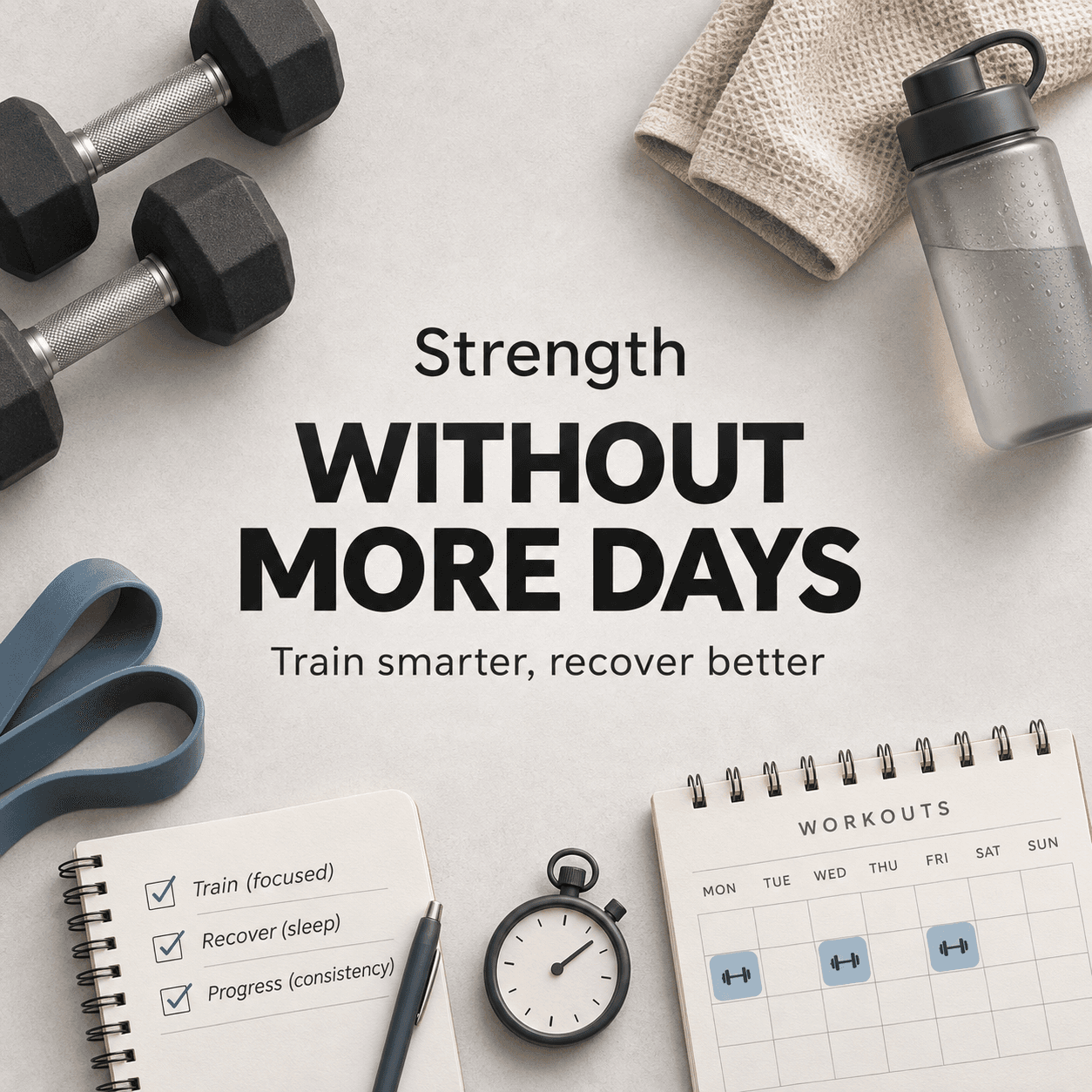
So instead, here’s a 3 day full body plan you can actually stick to. It’s built for busy adults who want to look athletic, feel strong, and keep the process simple. No complicated “muscle confusion”. No 90 minute marathons. Just repeatable training that hits everything that matters.
And yes, this works in a gym. Also works at home with a few basics.
Who this plan is for (and who it isn’t)
This plan is for you if:
You can reliably train 3 days a week (or at least most weeks).
You want a lean, strong, “movie star” kind of build. Not necessarily powerlifting totals.
You want structure, but not a spreadsheet that makes you hate your life.
You’re okay repeating the basics and getting better at them.
This plan is not for you if:
You’re trying to specialize hard in one lift (like peaking your squat for a meet).
You insist on doing something different every workout, forever.
You have a medical issue that needs a clinician’s input. In that case, get cleared first.
The simple rules (so the plan actually works)
Before we jump into workouts, this is the stuff that makes it effective.
Rule 1: Train 3 non-consecutive days
Most people do:
Monday Wednesday Friday or
Tuesday Thursday Saturday
If your week is chaos, just aim for “one day on, one day off” as much as possible.
Rule 2: Stay in the 45 to 70 minute range
If you can do 45 minutes, do 45. Consistency beats perfection.
Rule 3: Leave 1 to 2 reps in the tank on most sets
You do not need to crawl out of the gym.
Most sets should feel like: “I could do one more rep, maybe two, but I’m stopping.”
Rule 4: Progress one thing at a time
Add a rep. Add 2.5 to 5 pounds. Add a set. Improve form. Any one of those is progress.
What you’ll need (gym vs home)
Gym option
You’ll get the best results with:
A squat rack (or at least dumbbells)
A bench
Pullup bar or cable machine
Dumbbells
Home option
Totally doable if you have:
Adjustable dumbbells (or a few pairs)
A bench (even a simple flat bench)
A pullup bar (doorframe is fine if it’s sturdy)
If you’re missing something, don’t quit. Use the substitutions listed under each workout.
The weekly layout
You’ll do three full body sessions, each with a slightly different emphasis.
Day 1: Strength focus (lower + push + pull)
Day 2: Volume and shape (hypertrophy focus)
Day 3: Athletic full body (hinge + back + conditioning finisher)
Each day has:
A main lower-body lift
A main upper-body push
A main upper-body pull
1 to 2 accessories
Optional finisher (short, not evil)
1) Squat pattern (pick one)
A. Back Squat — 4 sets of 4 to 6 reps, rest 2 to 3 minutes
B. Goblet Squat (home friendly) — 4 sets of 8 to 12 reps, rest 90 seconds
Goal: crisp reps, controlled depth, stop before form breaks.
2) Upper push
Bench Press or Dumbbell Bench Press — 4 sets of 5 to 8 reps, rest 2 minutes
If shoulders hate flat bench, do an incline dumbbell press instead.
3) Upper pull
Pullups or Lat Pulldown — 4 sets of 6 to 10 reps, rest 90 seconds
No pullup bar? One arm dumbbell row works fine.
4) Secondary hinge (posterior chain)
Romanian Deadlift (barbell or dumbbells) — 3 sets of 6 to 10 reps, rest 90 seconds
Hamstrings should light up. Lower back should not.
5) Core (quick)
Dead Bug or Plank — 2 to 3 sets, 30 to 45 seconds each
Optional finisher (6 minutes)
6 rounds: 20 seconds hard on a bike or rower, followed by 40 seconds easy.
Keep it short. You should leave feeling better, not wrecked.
This is where people usually start noticing changes. Better pump. Better posture. Clothes fit different. Not overnight, but it starts.
1) Single-leg lower body
Bulgarian Split Squat
3 sets of 8 to 12 reps per leg
Rest 90 seconds
If you hate these, you’re normal. Do reverse lunges instead.
2) Upper push (slightly higher reps)
Incline Dumbbell Press
3 to 4 sets of 8 to 12 reps
Rest 90 seconds
3) Upper pull (back thickness)
Chest-Supported Row or One-Arm Dumbbell Row
4 sets of 8 to 12 reps
Rest 90 seconds
4) Shoulders (simple, effective)
Dumbbell Lateral Raise
3 sets of 12 to 20 reps
Rest 60 seconds
Keep it strict. Small weights. Slow reps. Feel the side delts.
5) Arms superset (fast, optional but fun)
Do 2 to 3 rounds:
Biceps Curl: 10 to 15 reps
Triceps Rope Pushdown or Overhead Extension: 10 to 15 reps
Rest 60 seconds between rounds
If time is tight, skip arms. You’ll still build arms from pressing and pulling anyway.
Optional finisher (8 minutes)
Carry work. Great for busy adults because it trains grip, core, posture, and conditioning without thinking.
Farmer Carry: 8 to 10 trips of 20 to 30 meters
Rest as needed, keep it moving
No space? Do timed holds. 20 to 40 seconds. Same idea.
This is the day that makes you feel capable. Like your body is useful, not just decorative.
1) Hinge pattern (pick one)
3 sets of 3 to 5 reps
Rest 2 to 3 minutes
B. Dumbbell Deadlift (home)
4 sets of 6 to 10 reps
Rest 2 minutes
If deadlifts beat you up, do hip thrusts instead. Seriously, no ego needed.
2) Upper push (overhead)
Standing Overhead Press (barbell or dumbbells)
4 sets of 5 to 8 reps
Rest 2 minutes
Can't press overhead comfortably? Do a landmine press, or a high incline press.
3) Upper pull (vertical or mixed)
3 sets of 6 to 10 reps
Rest 90 seconds
4) Glutes + hamstrings accessory
Hip Thrust or Glute Bridge
3 sets of 8 to 12 reps
Rest 90 seconds
5) Conditioning finisher (10 minutes, pick one)
Choose what you will actually do. That matters more than the perfect protocol.
Option A: Incline treadmill walk
10 minutes brisk and steady
Option B: Row or bike intervals
10 rounds total
15 seconds hard effort
45 seconds easy effort
Option C: Bodyweight circuit (home)
5 rounds, not for time
10 pushups
15 air squats
20 mountain climbers (total)
30 seconds rest between rounds
You should finish breathing hard but not seeing your ancestors.
Warm-up (keep it boring and fast)
You don't need a 20 minute warm-up. You need your joints warm and your first work set to feel decent.
Do this before each workout:
3 to 5 minutes easy cardio (walk, bike, jump rope)
8 hip hinges (hands on hips, learn the pattern)
8 pushups (incline if needed)
10 band pull-aparts or face pulls (if you have a band)
Repeat the movement drills for 2 rounds, then ramp up your first lift with a couple lighter sets.
How to progress (without overthinking it)
This is where most plans fall apart. People either do nothing different for months, or they go too hard and crash.
Here are two easy progression options. Pick one.
Option 1: Double progression (my favorite)
Let's say the plan calls for 4 sets of 5 to 8 reps. Week to week, try to add reps until you hit the top of the range on all sets. Then add a small amount of weight and repeat.
Example on dumbbell bench:
Week 1: 50s for 8, 7, 6, 6
Week 2: 50s for 8, 8, 7, 6
Week 3: 50s for 8, 8, 8, 7
Week 4: 50s for 8, 8, 8, 8
Week 5: 55s and reps drop a bit, then build back up
Simple. It works forever.
Incorporating bodyweight training into your routine can also help in achieving these progressions more effectively.
Option 2: Add weight slowly, keep reps steady
Stay at the same reps each week and add 2.5 to 5 pounds when you can without form collapsing.
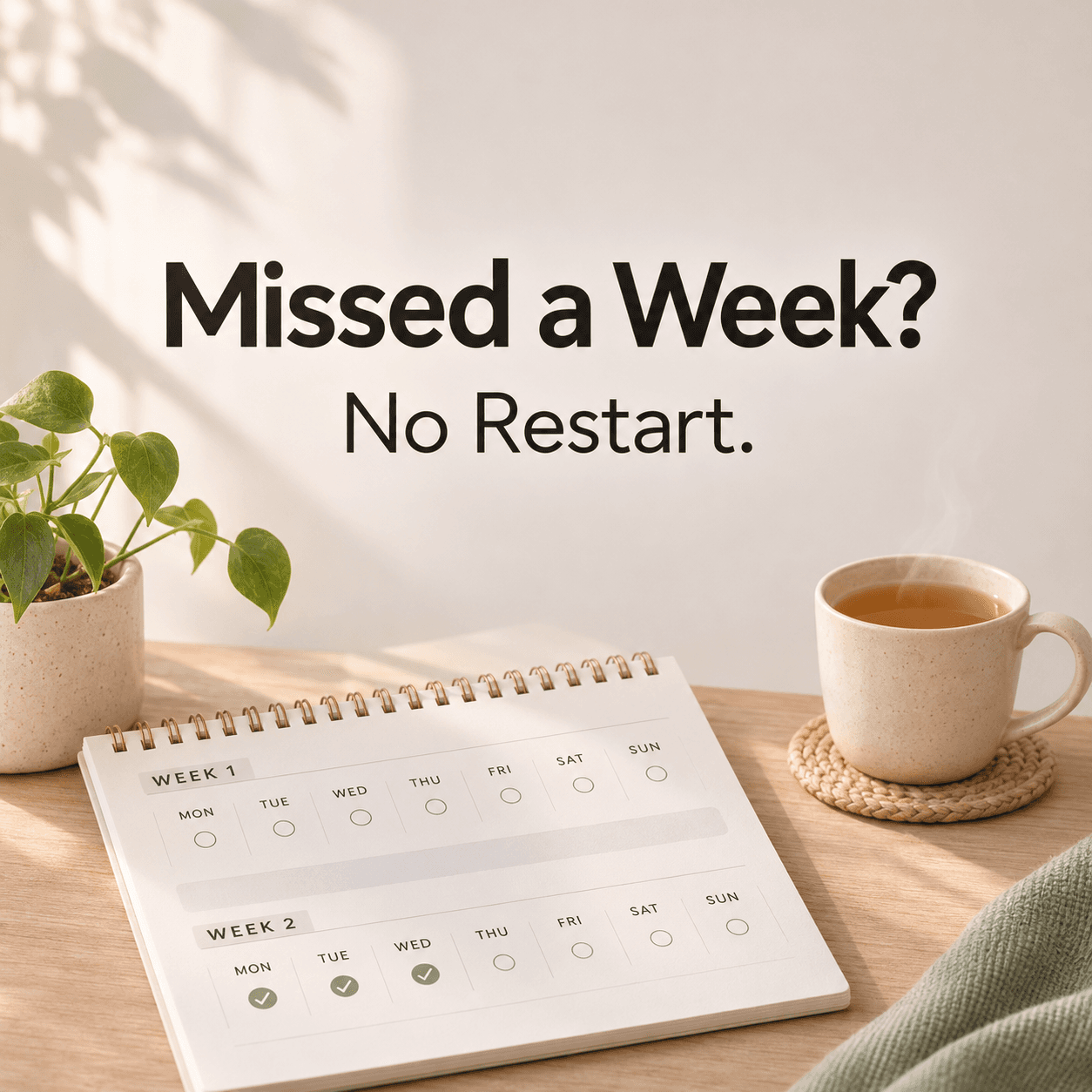
If you miss a workout (real life plan)
If you miss a day, do not “make up” three workouts in five days. That’s how busy adults get hurt.
Just continue:
Missed Day 2? Next time you train, do Day 2.
Missed a whole week? Come back with slightly lighter weights for the first week back.
That’s it. No guilt ritual.
Common mistakes that quietly kill results
1) Training too hard, too often
If you turn every set into a near-death experience, you’ll dread training. Then you’ll skip. Then it’s over.
Leave a rep or two in the tank.
2) Doing random exercises instead of repeating the basics
The basics are boring because they work. Squat patterns. Hinges. Presses. Pulls. Loaded carries. Done.
For strength training beginners, focusing on these fundamental exercises is key to achieving your fitness goals.
3) Not tracking anything
You don’t need a fancy app. Notes on your phone is enough.
Write: exercise, weight, reps.
4) Ignoring protein and sleep
No, you don’t need a complicated meal plan. But you do need the basics.
Aim for:
Protein with each meal (a real serving)
7 hours of sleep when possible
A daily walk if you can manage it
Boring again. Still works.
It's also important to build muscle without gaining fat by maintaining a balanced diet and exercise routine.
Quick substitutions (when equipment is limited)
Back squat → goblet squat, front squat, leg press
Deadlift → trap bar deadlift, Romanian deadlift, hip thrust
Bench press → dumbbell bench, pushups, incline press
Pullups → lat pulldown, dumbbell row, inverted row
Cable row → band row, dumbbell row
Lateral raise → band lateral raise, lean-away raise
If you can’t do the perfect exercise, do the close cousin and move on.
What results to expect (realistically)
If you train 3 days a week, progressively, and you’re not eating like a stressed raccoon at midnight, you can expect:
Noticeably better strength in 4 to 6 weeks
Visible body changes in 6 to 12 weeks (especially shoulders, chest, back)
Better posture and fewer aches if you keep form clean
More energy, weirdly. Even though you’re “doing more”
And yes, it can build a legit impressive physique. A lot of actor transformations are basically this structure, just dialed in.
Want an even more plug-and-play version?
If you like this simple, no-noise approach, you’d probably vibe with the training guides on Freedom’s Fitness.
They’re straightforward PDF programs you can pull up on your phone at the gym or at home, and they’re built around the same idea. Practical workouts that actually deliver, without the confusing fitness industry circus.
You can check them out here: https://www.freedomsfitness.com/
Wrap up
A 3 day full body plan is not the “busy person alternative”.
For most adults, it’s the sweet spot. Enough frequency to build muscle. Enough recovery to stay consistent. Enough structure that you don’t waste time wandering around doing random cable exercises because you saw them on social media.
Try it for 6 weeks. Track your lifts. Keep the effort honest. Then adjust, not because you got bored, but because you got stronger.
That’s the whole game, really.

Comments